India is moving towards sustainable energy, and Delhi’s solar scene is growing fast. The need for clean energy has boosted the number of solar panel makers in Delhi. This shows Delhi’s key role in solar manufacturing in India.
Local businesses are answering the call of a growing market, thanks to government support for green energy. The rise in solar suppliers in Delhi is a positive sign for the industry. This part will explore what’s making this sector so dynamic.
Key Takeaways
- Delhi is witnessing a notable increase in solar panel manufacturers.
- The shift towards renewable energy is supported by government initiatives.
- There is a growing market for solar solutions within India.
- Local manufacturing is becoming essential to meet energy demands.
- Statistics indicate significant growth in the solar manufacturing sector.
Overview of the Solar Manufacturing Ecosystem in Delhi
The solar manufacturing ecosystem in Delhi is key to boosting renewable energy in India. It supports energy security and promotes sustainable practices. As solar energy’s importance grows, businesses and governments are investing heavily in it.
Significance of Solar Energy in India
Solar energy is vital for India’s energy future. The country gets plenty of sunlight all year, making solar power a good solution for energy needs. Using solar energy helps India use its natural resources well and cut down on carbon emissions.
This renewable energy also boosts the economy and helps India be more energy independent.
Current Trends in Solar Manufacturing
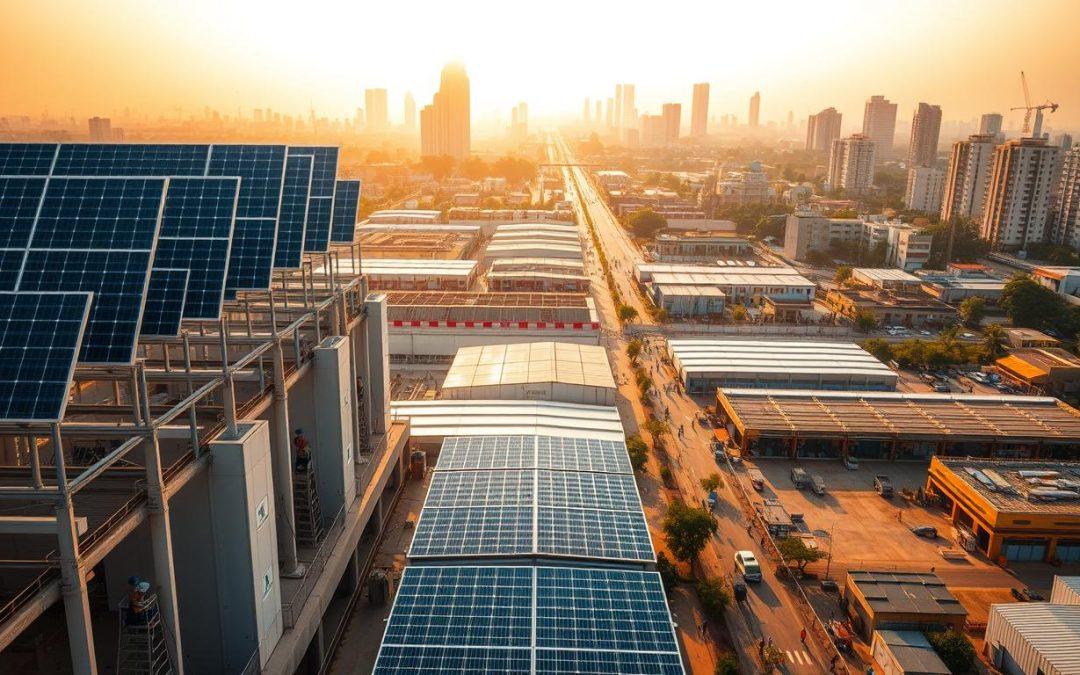
Delhi has seen big changes in solar manufacturing recently. Solar farms are popping up everywhere, showing India’s dedication to renewable energy. New tech in solar panels makes them work better and cost less, creating a competitive market.
Local manufacturing is becoming more common as India tries to use fewer imports. This move strengthens India’s energy independence.
Key Players in the Solar Manufacturing Industry
The solar manufacturing scene in Delhi is filled with a variety of key players. They all play a big role in the industry. Major solar manufacturers shape market trends and drive innovation. Local solar startups in Delhi bring new ideas and quick action to the industry.
Overview of Major Manufacturers
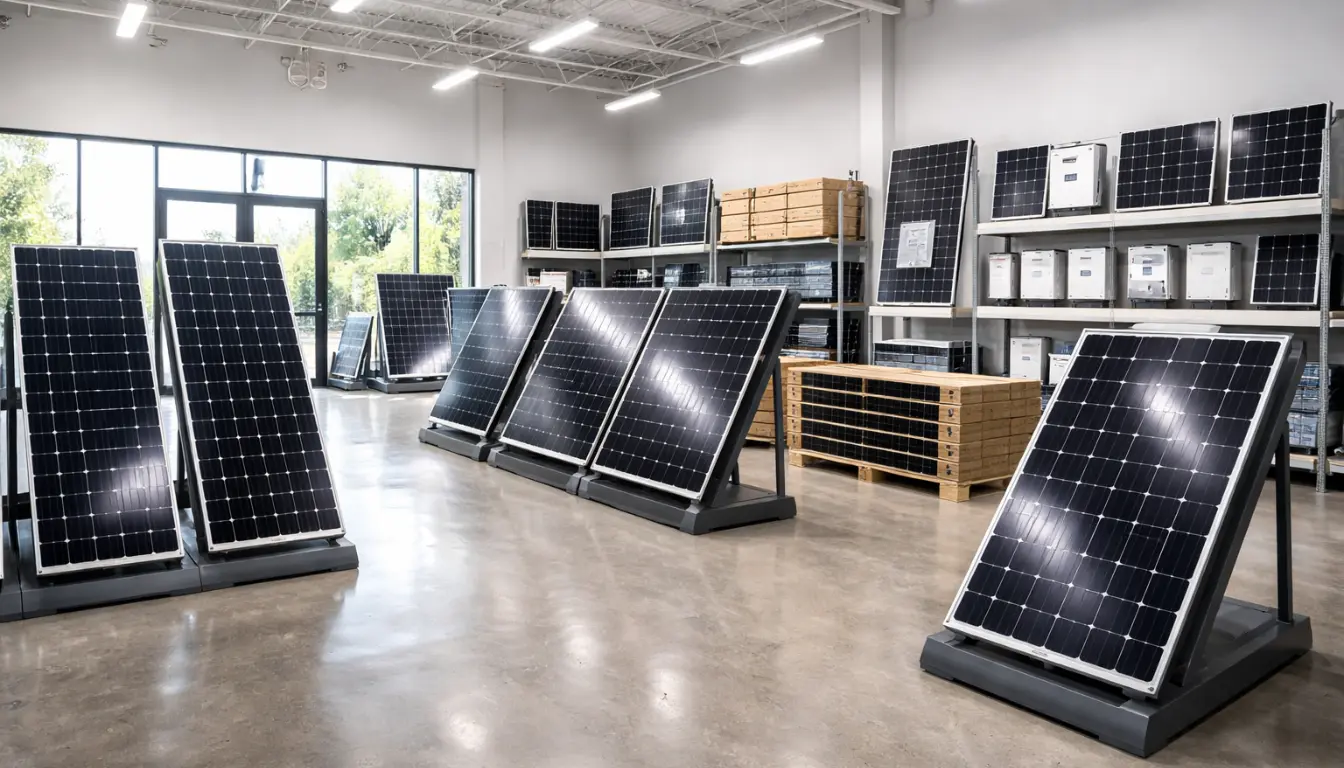
Big solar manufacturers in Delhi are well-known in the market. Companies like Tata Power Solar, Vikram Solar, and Huawei lead the way. They focus on making high-quality solar products like panels, inverters, and energy storage systems.
They work hard to meet both local and global demands. This ensures their operations are sustainable and efficient.
Role of Local Startups in the Market
Solar startups in Delhi show the power of innovation. They challenge old ways and offer new solutions for local needs. Their ability to change quickly helps them keep up with new tech and what customers want.
These startups add to the competition, making the industry more vibrant. They help the big players by bringing new ideas and energy to the market.
Understanding Solar Panel Manufacturers in Delhi
Delhi is a key place for solar panel companies. It offers a wide range of products and new technologies. Companies like Tata Power Solar and Vikram Solar are leaders in the field. They focus on making solar technology better and more sustainable.
This section looks at top manufacturers in Delhi. It also explores the latest technologies they use.
Leading Companies in the Capital
Tata Power Solar is a top name in Delhi’s solar industry. It’s known for quality products and energy solutions. Vikram Solar is also a major player, known for its creativity and big manufacturing.
Both companies make solar panels, inverters, and full solar systems. They meet India’s growing need for clean energy.
Innovations and Technologies Used
The competition among Delhi’s solar makers has led to big tech leaps. New things like bifacial solar panels and better photovoltaic systems have come out. These help catch more energy and make power more efficiently.
Automation in making things also helps. It makes production cheaper and more efficient. These advances help solar products work better and support sustainable energy goals.
Major Hubs for Solar Manufacturing in Delhi
Delhi is key in India’s solar manufacturing growth. Certain areas in the city are major solar manufacturing hubs. They grow thanks to their strategic locations. This shows how location affects work efficiency and supply chains.
Identifying Key Industrial Areas
Some industrial zones in Delhi are leading in solar manufacturing. Anand Parbat and Okhla Industrial Estate are at the forefront. They have good infrastructure and are well-connected.
These zones are home to many manufacturers and suppliers. This speeds up production and boosts innovation.
Impact of Geographical Location on Manufacturing
The location of solar manufacturing in Delhi is very important. Being close to resources and transport networks helps manage the supply chain better. This leads to lower costs and better efficiency.
Reports show that these advantages make Delhi’s solar manufacturing thrive. It helps the economy and supports sustainable energy.
Quality Benchmarks in Solar Panel Production
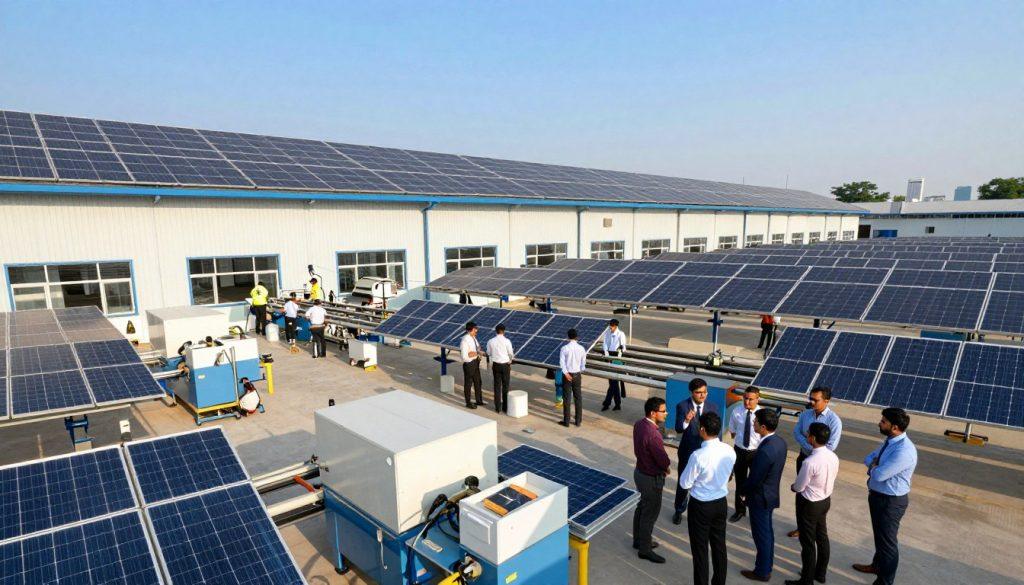
The solar manufacturing industry is growing fast. It’s key to set quality standards to meet high performance and durability needs. Following solar panel quality standards helps manufacturers stay credible and offer reliable energy solutions. The Bureau of Indian Standards (BIS) sets rules for production, focusing on efficiency and safety.
Industry Standards and Certifications
In India, solar panel production follows strict industry standards. These standards set the quality requirements for solar products. Getting certifications from respected bodies like BIS helps build trust in the market. Following these standards helps choose the right materials and promotes sustainable manufacturing practices.
Importance of Quality Control Processes
Quality control is vital in solar manufacturing. Manufacturers use tough testing methods to check if solar panels can handle environmental stress. They test panels in labs and in the field to check their durability and performance. Good quality control practices lead to constant improvement, protecting consumer investments and growing the solar market.
MNRE and IEC Certifications Explained
The MNRE (Ministry of New and Renewable Energy) and IEC (International Electrotechnical Commission) certifications are key in the solar world. They make sure solar products are safe and reliable. Getting these certifications boosts a company’s reputation, leading to more trust from customers and a bigger market share.
What are MNRE and IEC Certifications?
The MNRE certification checks if solar products and technologies meet India’s standards. It ensures high-quality solar systems. IEC standards, on the other hand, follow global benchmarks. Together, they ensure solar products work well and safely worldwide.
How to Obtain Certification for Solar Products
Getting certified can be tricky but it’s vital for makers. Here’s what you need to do:
- Find out which certification you need based on your product.
- Get ready your documents like technical specs and how you make your products.
- Send your products to labs that are approved to check if they meet MNRE and IEC standards.
- If your product passes, you’ll get your certification.
Following the MNRE certification process and getting IEC standards certification helps you meet rules. It also helps you stand out in growing markets.
| Certification Type | Purpose | Target Market |
|---|---|---|
| MNRE Certification | Validates solar products for national standards | India |
| IEC Standards Certification | Ensures compliance with international benchmarks | Global |
Challenges in the Solar Manufacturing Supply Chain
The solar manufacturing supply chain has many challenges. These include shortages of raw materials, higher logistics costs, and price changes. As demand for solar products grows, understanding these issues is key to keeping operations sustainable and efficient.
Key Obstacles Faced by Manufacturers
Several obstacles block the flow of materials and products in the solar supply chain:
- Raw Material Shortages: Not having enough silicon or special metals can slow production.
- Logistics Inefficiencies: Delays in transport and poor distribution networks can mess up plans.
- Fluctuating Prices: Price changes in raw materials make it hard to budget and predict costs.
Strategies to Overcome Supply Chain Issues
To tackle the solar supply chain’s complexities, companies can use several strategies:
- Better Forecasting: Using advanced analytics and predictive models helps predict demand changes.
- Enhanced Supplier Relationships: Building strong partnerships with suppliers makes getting materials more reliable.
- Leveraging Technology: Using tech for managing inventory and logistics can make operations smoother and more efficient.
Buyer Evaluation Checklist for Solar Panels
Buying solar panels is a big deal. This guide helps you check if a manufacturer is right for you. Look at warranties, certifications, and support after you buy. Knowing these things helps you make a smart choice.
What to Consider When Choosing a Manufacturer
Choosing a solar manufacturer involves several key points. Here are a few important ones:
- Warranty options: Know how long and what the warranty covers.
- Product certifications: Check if the products meet quality and safety standards.
- After-sales support: See if there’s help available after you buy.
- Track record: Look for a manufacturer with a good history of success.
- Customer reviews: What others say can tell you a lot about the product’s performance.
Factors Affecting Pricing and Quality
Understanding what affects solar panel prices is key. Here are some main factors:
| Factor | Description |
|---|---|
| Material Costs | The materials used affect both price and quality. Better materials mean better performance and longer life. |
| Manufacturing Processes | Modern manufacturing methods can make panels more efficient and cheaper. |
| Technological Advancements | New tech can make panels more efficient, which might mean a higher price. |
| Market Demand | Prices can change based on how much is available and how much people want it. |
IB Solar’s Role in Strengthening India’s Domestic Manufacturing Ecosystem
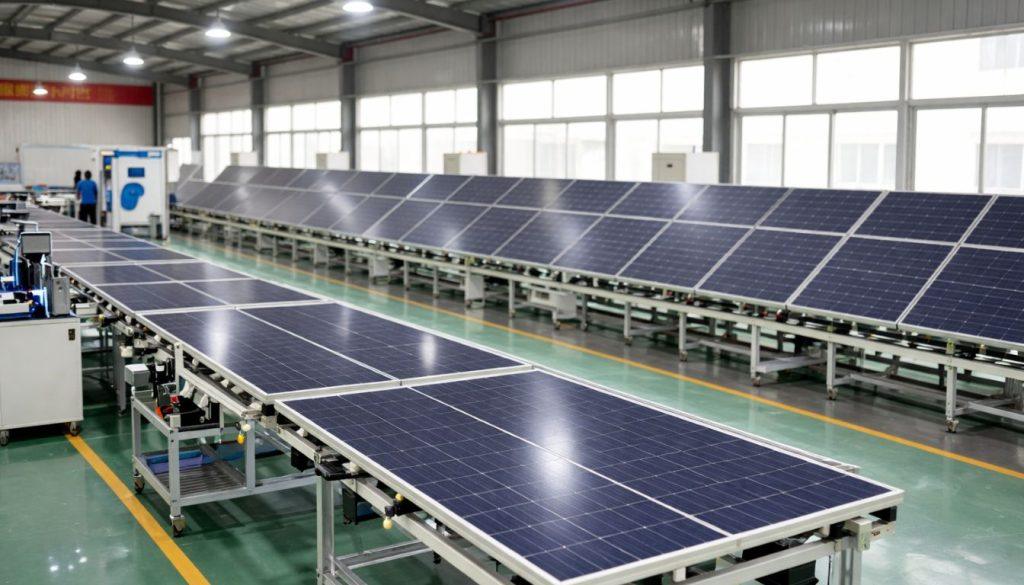
IB Solar is key in boosting India’s solar panel manufacturing. They follow global standards but meet local needs. Their use of new technologies makes solar modules more efficient, helping India reach its green goals.
Overview of IB Solar’s Manufacturing Standards
IB Solar focuses on quality and sustainability in their making. They use smart methods to make more with less. This approach makes their products reliable and eco-friendly.
Quality Control Processes and Certification Compliance
IB Solar has strict quality checks. Every step follows MNRE and IEC rules. This ensures solar modules in India are top-notch and safe.
Production Capacity and Market Contributions
IB Solar has a big production capacity. They meet India’s growing solar needs. Their tech and infrastructure investments make them a major player in green energy.
The Future of Solar Manufacturing in Delhi
The solar manufacturing sector in Delhi is on the verge of a big change. Thanks to government support and growing public interest, new solar technologies are emerging. These include using solar power for vertical farming and reusing electric vehicle batteries to store energy.
This growth opens up big opportunities for both new and existing companies. As more people want clean energy, the ability to make solar products will grow. Tech startups and government support are key to this progress.
The future of solar in Delhi depends on everyone working together. By adopting and adapting to new technologies, the industry is leading India’s shift to renewable energy. This will create a better environment for future generations.
Conclusion
The solar manufacturing scene in Delhi is booming. This is thanks to the growing need for clean energy. Both big companies and new startups are working hard together.
They are improving how they make solar panels and meeting high standards. They are also tackling supply chain issues. This makes Delhi a key part of India’s solar energy world.
Looking ahead, it’s important for everyone to work together and invest in new ideas. The growth possibilities are huge. This shows we need to all support solar power to meet our energy needs.
This summary not only shows what’s happening now but also gives us hope for the future. It’s all about moving towards a greener, more sustainable world.
Solar panel makers play a big role in helping our planet. Delhi is becoming a center for making solar panels. Working together and coming up with new ideas will help us use solar energy better in India.
With everyone’s help, the future of solar energy looks bright. It’s good for the industry and for our planet.