
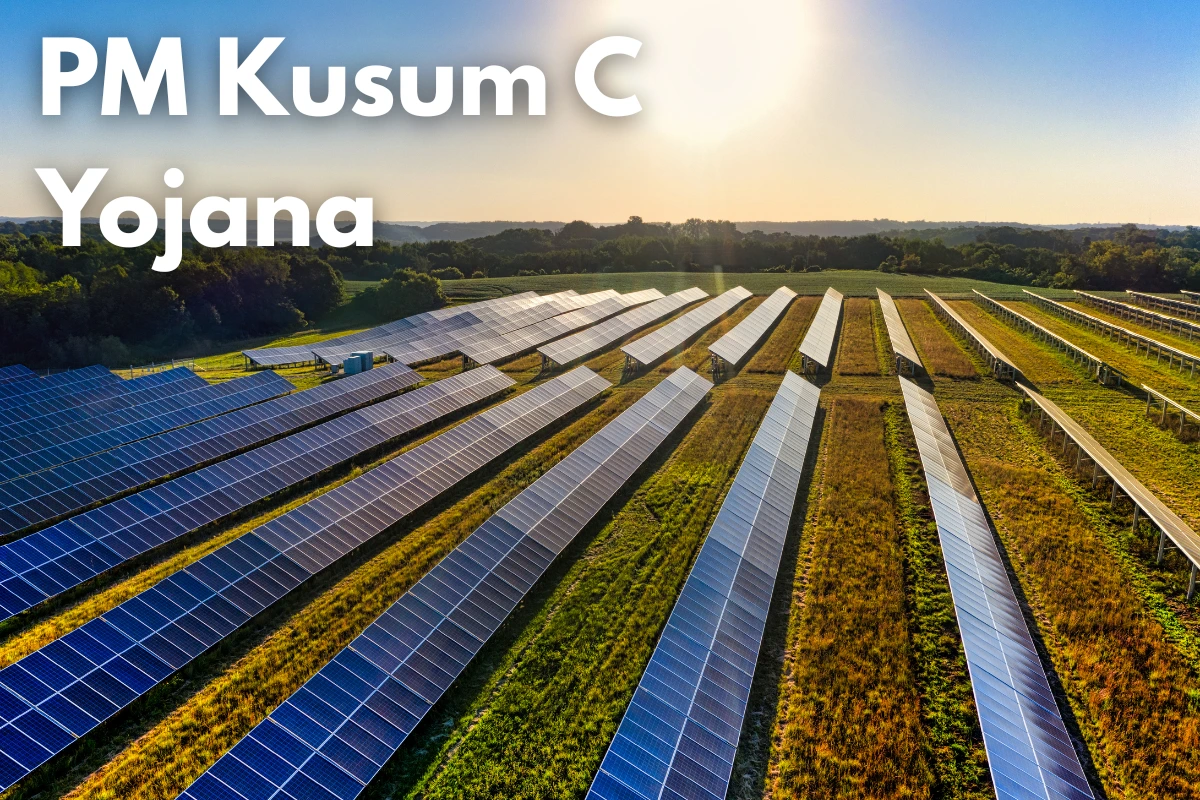
What is PM Kusum C Yojana?
The PM-KUSUM (Pradhan Mantri Kisan Urja Suraksha evam Utthaan Mahabhiyan) scheme, launched by the Government of India, aims to promote renewable energy and provide sustainable solutions to India’s agricultural sector. Component C of this scheme specifically focuses on the solarization of existing agriculture pumps connected to the grid, allowing farmers to use solar energy for irrigation while also feeding surplus power back into the grid.
This initiative supports daytime reliable electricity for farmers, reduces their dependence on costly diesel or erratic grid supply, and encourages clean energy adoption at the grassroots level.
Farmers can sell unused electricity back to the DISCOMs, generating additional income and ensuring efficient grid use
At IB Solar, we are proud contributors to the success of Kusum-C with our ALMM-listed high-efficiency modules. Our Mono PERC 144-cell Half-Cut Quester series (545Wp/550Wp) and latest N-Type TOPCon Valor series (580Wp–640Wp) are widely used for ground-mounted agricultural solarization projects.
With advanced automation, precise engineering, and industry-trusted BOM quality, IB Solar has empowered thousands of farmers with reliable solar solutions that lower input costs and promote clean energy farming.
Feeder Solarisation under PM KUSUM C
Feeder solarisation involves installing solar power plants to supply electricity directly to agricultural feeders. This helps in:
- Providing consistent daytime power supply to farmers
- Reducing transmission losses
- Lowering the burden on DISCOMs
- Promoting decentralised renewable energy generation
The solar plants can be installed near substations or along feeder lines to ensure efficient distribution.
Subsidy and Financial Structure
PM KUSUM Component C is implemented through a structured financial model:
- Central Government support for solarisation projects
- State Government participation depending on region
- DISCOM involvement in execution and operation
- Investment recovery through long-term power purchase agreements
This model ensures sustainability and scalability of feeder-level solar projects.
Eligibility for PM KUSUM Component C
Eligibility typically includes:
- DISCOMs and state utilities responsible for feeder management
- Agricultural feeders with significant load demand
- Areas with suitable land availability for solar plant installation
- Compliance with MNRE guidelines
Farmers benefit indirectly through improved and reliable power supply.
Benefits of PM KUSUM C Yojana
- Reliable daytime electricity for irrigation
- Reduced power outages in rural areas
- Lower operational costs for DISCOMs
- Clean energy adoption at scale
- Improved efficiency in agricultural power distribution
How PM KUSUM C Works
- Identification of agricultural feeders
- Feasibility study and project approval
- Solar plant installation near feeders
- Grid integration and commissioning
- Continuous supply of solar power to agricultural loads
IB Solar Role in PM KUSUM C Projects
IB Solar provides high-efficiency solar panels and solutions suitable for feeder solarisation projects. Our products are designed for large-scale deployment and deliver consistent performance in diverse environmental conditions.
- High-efficiency Mono PERC solar panels
- Reliable performance for utility-scale applications
- Support for EPCs and project developers
- Durable systems built for long-term output
Why Choose IB Solar
- Proven expertise in solar manufacturing
- Panels designed for Indian climate conditions
- High durability and performance efficiency
- Strong industry presence and reliability
- Technical support for large-scale solar deployments
FAQs on PM KUSUM Component C
What is feeder solarisation?
It is the process of supplying agricultural feeders with solar-generated electricity instead of conventional power.
Who benefits from Component C?
Farmers, DISCOMs, and the overall power ecosystem benefit from improved efficiency and reliability.
Is subsidy available under this component?
Yes, financial support is provided through central and state government participation.
Can private players participate in these projects?
Yes, through partnerships with DISCOMs and government-approved tenders.