
India’s solar energy sector is expanding rapidly, creating new opportunities for businesses, industries, institutions, and utility-scale power developers. As solar adoption grows, choosing the right Engineering, Procurement and Construction (EPC) partner becomes essential for building efficient, reliable, and commercially viable solar power projects.
But what are the best solar EPC companies in India? The answer depends on your project size, technology requirements, budget, location, execution timeline, and long-term maintenance needs.
In this guide, we explore leading solar EPC companies in India, their areas of expertise, and the factors businesses should consider before selecting an EPC partner.
What Is a Solar EPC Company?
A solar EPC company manages the engineering, procurement, and construction of a solar power project. Depending on the contract, an EPC provider can manage the project from initial assessment and system design to equipment procurement, installation, commissioning, and maintenance.
A solar EPC project typically includes:
- Engineering: Site assessment, feasibility studies, system design, electrical planning, and structural evaluation.
- Procurement: Sourcing solar modules, inverters, mounting structures, cables, and other balance-of-system components.
- Construction: Civil works, installation, electrical integration, testing, and commissioning.
- Operation and maintenance: Monitoring, preventive maintenance, troubleshooting, and performance optimisation, where included in the contract.
A reliable solar EPC partner brings these activities together to help reduce execution risks and improve the long-term performance of a solar installation.
Top Solar EPC Companies in India
The following companies operate across different parts of India’s solar ecosystem, including utility-scale projects, commercial and industrial installations, and renewable energy infrastructure. This is a curated list, not a definitive ranking of all EPC providers.
1. Tata Power Solar
Tata Power Solar is an established name in India’s solar industry, with experience across solar manufacturing, rooftop installations, and utility-scale solar projects.
The company is relevant for organisations looking for solar solutions across different project sizes, from distributed installations to large solar power developments.
Key areas to explore:
- Utility-scale solar projects
- Rooftop solar installations
- Solar modules and related solutions
- Solar project execution and services
Best suited for: Businesses, institutions, and project developers evaluating an established solar provider with experience across multiple market segments.
2. IB Solar
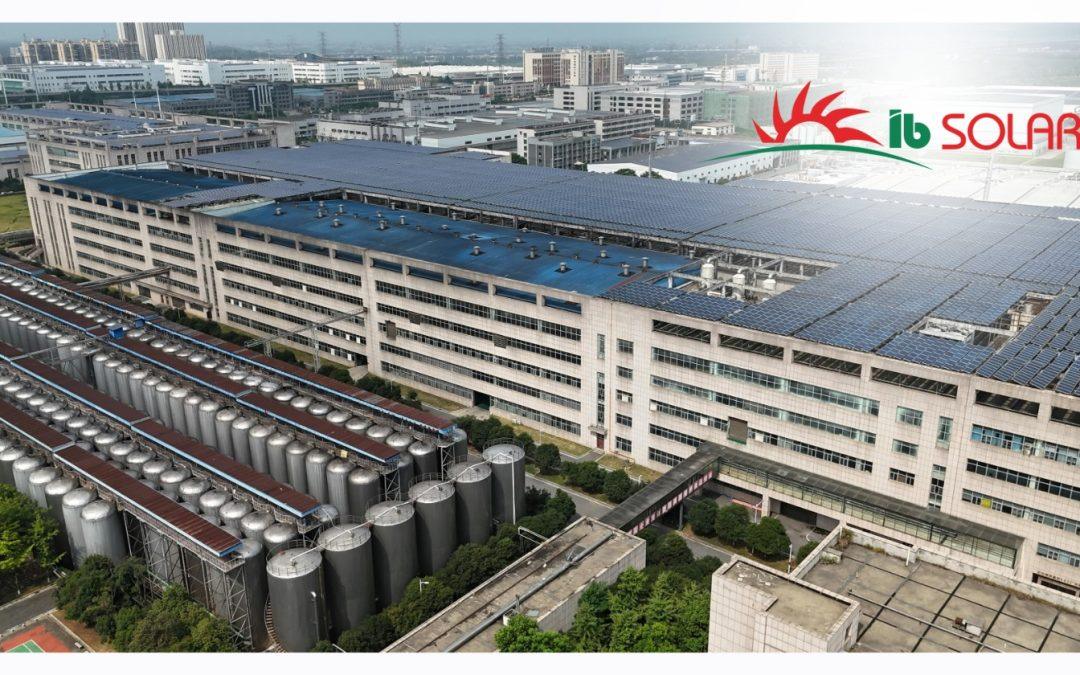
IB Solar, the solar brand of Integrated Batteries India Private Limited, combines solar manufacturing capabilities with end-to-end solar EPC solutions. The company’s offerings span commercial and industrial rooftop projects, ground-mounted solar installations, and floating solar solutions.
For businesses, choosing a solar partner with access to solar module technology as well as EPC capabilities can simplify technical coordination between equipment selection and project execution.
IB Solar offers project support covering site assessment, feasibility, system design, procurement, installation, testing, and commissioning. Its commercial and industrial rooftop solutions also include energy assessment and CAPEX or OPEX-oriented project planning, subject to project requirements.
Key areas to explore:
- Commercial and industrial rooftop solar EPC
- Ground-mounted solar projects
- Floating solar solutions
- High-efficiency N-Type TOPCon solar modules
- Solar system design and project execution
- Commissioning and operation and maintenance support, as applicable
Best suited for: Commercial and industrial businesses, institutions, and project developers looking for integrated solar manufacturing and EPC capabilities.
IB Solar’s combination of module manufacturing and EPC services can be particularly relevant when evaluating component quality, system design, procurement coordination, and long-term project performance together.
Explore IB Solar’s EPC solutions to learn more about its rooftop, ground-mounted, and floating solar capabilities.
3. Sterling and Wilson Renewable Energy
Sterling and Wilson Renewable Energy is an established international solar EPC player with experience in utility-scale photovoltaic projects. Its business focuses on the engineering and execution of large solar installations.
Key areas to explore:
- Utility-scale solar EPC
- Engineering and project management
- Solar power plant construction
- Project execution across multiple markets
Best suited for: Large solar developers, infrastructure investors, and organisations planning utility-scale projects.
4. Amara Raja Infra
Amara Raja Infra is part of the broader Amara Raja business ecosystem and has experience in infrastructure and energy-related projects, including solar EPC.
Its infrastructure capabilities make it worth evaluating for projects that require coordinated engineering, procurement, construction, and electrical infrastructure.
Key areas to explore:
- Solar EPC projects
- Electrical and infrastructure engineering
- Renewable energy project execution
- Large project coordination
Best suited for: Organisations evaluating solar EPC providers for infrastructure-linked and utility-scale requirements.
5. HARTEK Group
HARTEK Group operates in power infrastructure and renewable energy, with capabilities spanning solar EPC and electrical systems. Grid integration and electrical infrastructure are important considerations when developing large solar installations, making these capabilities relevant to project owners.
Key areas to explore:
- Solar EPC
- Electrical infrastructure
- Grid connectivity and power systems
- Renewable energy project execution
Best suited for: Businesses and developers seeking a provider with solar and power infrastructure capabilities.
Mercom India’s India Solar Market Leaderboard 2026 identified Tata Power Solar, Jakson Green, Sterling & Wilson, Amara Raja Infra, and HARTEK as the leading utility-scale solar EPC service providers by installations in 2025. This provides a useful reference for evaluating companies active in the large-project segment
- Larsen & Toubro (L&T)
Larsen & Toubro is a major engineering and infrastructure company with extensive experience in complex industrial and energy projects. Its broader engineering and construction capabilities are relevant when evaluating contractors for large infrastructure-linked solar developments.
Key areas to explore:
- Engineering and construction
- Electrical and power infrastructure
- Large-scale project management
- Renewable energy infrastructure
Best suited for: Project owners looking for an engineering-led contractor for complex infrastructure and energy developments.
7. Mahindra Susten
Mahindra Susten operates in the renewable energy sector, with a focus on solar project development and execution. It is another company worth considering when comparing EPC and renewable energy project capabilities.
Key areas to explore:
- Solar power projects
- Renewable energy development
- Engineering and project execution
- Utility-scale solar solutions
Best suited for: Businesses and developers evaluating established renewable energy project providers.
8. Waaree Renewable Technologies
Waaree Renewable Technologies operates in the solar project EPC segment and is associated with the broader Waaree solar ecosystem. Its project execution activities make it relevant to organisations assessing solar EPC providers for commercial and large-scale requirements.
Key areas to explore:
- Solar EPC and project execution
- Solar power plant development
- Commercial and utility-scale projects
- Integration with the wider solar supply chain
Best suited for: Businesses and developers comparing solar EPC providers with experience in solar project execution.
9. Jakson Green
Jakson Green operates in renewable energy infrastructure and offers solutions spanning solar power and other clean energy technologies. Its solar EPC activities make it a company to consider for larger renewable energy projects.
Key areas to explore:
- Utility-scale solar EPC
- Renewable energy project development
- Engineering and construction
- Integrated clean energy solutions
Best suited for: Developers and organisations exploring large-scale renewable energy infrastructure.
How to Choose the Best Solar EPC Company in India
The right solar EPC company should be selected on technical capability, project suitability, commercial viability, and long-term service support—not just the lowest quoted price.
Here are seven factors to evaluate before signing an EPC contract.
1. Project Experience and Execution Record
Review the company’s experience with projects similar to yours. A provider experienced in industrial rooftops may not necessarily have the same capabilities as one specialising in large utility-scale solar parks.
Ask for project references, commissioning records, and details of installations comparable in size and complexity to your project.
2. Solar Module Quality and Technology
Solar modules are a major component of a photovoltaic system. Their performance, degradation characteristics, warranty terms, and suitability for the site can influence long-term energy generation.
Evaluate module specifications and certifications, including whether the selected modules meet the requirements of the project and any applicable government scheme.
Technologies such as N-Type TOPCon and bifacial modules may offer advantages in appropriate applications, but the expected benefits depend on site conditions, system design, module quality, and installation.
3. Engineering and System Design
A reliable EPC partner should assess the project before recommending a system. This includes analysing energy consumption, available space, shading, structural conditions, electrical infrastructure, and grid connectivity.
For commercial and industrial rooftops, the design should also account for roof loading, safety requirements, and business operations during installation.
4. Transparent Pricing and Financial Modelling
Compare EPC quotations on a like-for-like basis. Check whether the price includes modules, inverters, mounting structures, cabling, civil works, installation, approvals, commissioning, and monitoring.
For commercial and industrial projects, ask for an estimate of expected energy generation, self-consumption, electricity bill savings, payback period, and return on investment. These estimates should state the assumptions used.
5. Quality, Safety, and Compliance
Check the company’s quality-control processes, project safety standards, relevant certifications, and compliance with applicable technical and regulatory requirements.
Where required, verify module eligibility under the applicable government scheme and current Approved List of Models and Manufacturers (ALMM) requirements.
6. Warranty and After-Sales Support
A solar project is a long-term asset. Before choosing an EPC provider, understand the warranty coverage for modules, inverters, mounting structures, workmanship, and other equipment.
Also confirm who will handle monitoring, maintenance, fault diagnosis, and performance issues after commissioning.
7. Storage and Future Expansion
Businesses with variable electricity demand or a need for backup may also evaluate solar-plus-battery-storage solutions. Battery energy storage can support specific applications such as peak-load management and backup, but its financial viability depends on the load profile, tariff structure, battery sizing, and operating requirements.
Choose an EPC partner that can assess your present energy needs and potential future expansion without recommending unnecessary capacity.
Solar EPC Companies: Rooftop vs Utility-Scale Projects
Not every EPC company specialises in every project category. Your shortlist should reflect the intended application.
| Project type | What to prioritise |
| Residential rooftop | System sizing, installation quality, warranties, service support |
| Commercial and industrial rooftop | Energy audit, structural assessment, savings analysis, minimal operational disruption |
| Ground-mounted solar | Land feasibility, civil engineering, evacuation infrastructure, project management |
| Utility-scale solar | Large-project execution, procurement capacity, grid integration, commissioning |
| Floating solar | Waterbody assessment, anchoring, specialised structures, environmental and operational considerations |
| Solar-plus-storage | Load analysis, battery sizing, system integration, safety, lifecycle economics |
For businesses, a well-designed system that matches actual energy consumption can be more valuable than a larger installation that produces power when it is not needed.
Why Solar EPC Quality Matters for Long-Term Returns
Solar project economics depend on more than the initial installation cost. Equipment selection, design accuracy, workmanship, commissioning quality, and ongoing maintenance all influence how a project performs over its lifetime.
An effective EPC partner can help businesses:
- Reduce design and installation errors.
- Coordinate equipment procurement and project execution.
- Improve system reliability through appropriate component selection.
- Plan installation around operational requirements.
- Establish monitoring and maintenance processes.
- Evaluate project economics using realistic generation and savings assumptions.
Before finalising an EPC partner, request a detailed technical proposal and compare the scope of work, warranties, exclusions, expected generation, and maintenance arrangements.
Conclusion: Which Solar EPC Company Should You Choose?
The best solar EPC company in India depends on your project’s size, location, technical requirements, and commercial objectives. Companies such as Tata Power Solar, Jakson Green, Sterling and Wilson Renewable Energy, Amara Raja Infra, HARTEK, L&T, Mahindra Susten, and Waaree Renewable Technologies offer different capabilities across the solar and infrastructure ecosystem.
For commercial and industrial buyers, it is worth evaluating providers that combine engineering expertise, reliable equipment, transparent financial planning, and long-term service support.
IB Solar brings together solar module manufacturing and EPC solutions across rooftop, ground-mounted, and floating solar applications. Businesses exploring a solar project can assess its capabilities alongside their technical, financial, and operational requirements.
Planning a commercial or industrial solar project? Visit IB Solar to explore its EPC solutions and discuss the requirements of your site.
Frequently Asked Questions
Which are the best solar EPC companies in India?
Leading companies to evaluate include Tata Power Solar, Jakson Green, Sterling and Wilson Renewable Energy, Amara Raja Infra, HARTEK, L&T, Mahindra Susten, Waaree Renewable Technologies, and IB Solar. The right choice depends on project scale, technical needs, location, pricing, and service requirements.
What does a solar EPC company do?
A solar EPC company manages engineering, procurement, and construction for a solar project. Depending on the contract, its responsibilities may include feasibility assessment, system design, equipment supply, installation, grid integration, testing, commissioning, and maintenance.
How do I select a solar EPC company for an industrial rooftop?
Evaluate the company’s industrial rooftop experience, structural assessment process, module and inverter specifications, energy-generation estimates, project pricing, safety practices, warranties, and after-sales support.
Is a solar panel manufacturer the same as a solar EPC company?
No. A solar panel manufacturer produces photovoltaic modules, while an EPC company designs and builds solar power systems. Some businesses, including IB Solar, offer both solar manufacturing and EPC solutions.
What is the difference between CAPEX and OPEX solar models?
Under a CAPEX model, the customer typically invests in and owns the solar installation. Under an OPEX or third-party ownership model, a service provider generally finances and operates the system, and the customer pays according to the agreed commercial arrangement. Contract terms vary, so compare ownership, tariffs, savings, responsibilities, and duration before deciding.
How much does a solar EPC project cost in India?
The cost depends on system capacity, module and inverter selection, site conditions, civil and electrical work, grid connectivity, installation complexity, and maintenance requirements. A site assessment and detailed technical-commercial proposal are needed for a reliable estimate.
Does IB Solar provide solar EPC services?
Yes. IB Solar’s EPC offerings include commercial and industrial rooftop solar, ground-mounted solar, and floating solar solutions. The scope and feasibility depend on the project requirements. Visit its EPC solutions page for further information.
What should a solar EPC quotation include?
A detailed quotation should specify system capacity, equipment brands and specifications, installation scope, civil and electrical works, grid connection responsibilities, commissioning, warranties, exclusions, payment milestones, and any operation and maintenance services.